

September 26, 2026
By
DuoHide
The Ultimate Leather Sizing & Fit Guide for Jackets
Finding the perfect fit in a leather jacket is both an art and a science. Unlike fabrics woven from cotton or synthetic blends, high-grade natural leather possesses unique structural characteristics. It does not stretch generously upon initial wear, nor does it drape loosely over uneven contours without precise patterning. Whether you are an individual client investing in a bespoke leather statement piece or a B2B wholesale buyer curating sizing charts for an international retail line, understanding leather jacket measurements is paramount to avoiding costly returns, sizing discrepancies, and customer dissatisfaction.
At DuoHide, every jacket is crafted using precision patterns tailored to accommodate human biomechanics while maintaining a sharp, structured silhouette. This comprehensive guide outlines step-by-step measurement methodologies, fit classifications, leather break-in behaviors, and critical considerations for bespoke and bulk ordering.
Why Leather Jacket Sizing Requires Precision?
Leather is an organic material with high tensile strength and distinct density. When a leather garment is stitched, its seams hold firm structural boundaries. While full-grain and top-grain leathers do soften and mold slightly to the wearer's anatomy over time—a process known as "breaking in"—they will never expand in overall dimensions like elasticated textiles.
An improper fit compromises both aesthetics and longevity:
Too Tight: Restricts shoulder movement, strains the armhole seams, causes zip stress, and creates unsightly tension lines across the chest and upper back.
Too Loose: Destroys the tailored silhouette, causes premature creasing at the elbows, leads to sagging shoulders, and allows cold wind to penetrate underneath the hem.
Essential Tools and Preparation for Measurement
Before taking any physical body measurements, ensure you have the correct equipment and setup:
1. Flexible Tailor’s Tape: Use a standard fiberglass or soft vinyl measuring tape. Do not use metal construction tapes, as they do not wrap tightly around bodily curves.
2. Form-Fitting Clothing: Take measurements while wearing a thin t-shirt or light base layer—the exact type of clothing you intend to wear beneath the leather jacket.
3. Assistance: Always have another person take the measurements for you. Self-measurement leads to posture shifts, raised shoulders, and inaccurate readings.
4. Upright Posture: Stand relaxed with arms resting naturally at your sides, feet shoulder-width apart, and breathe normally. Do not puff out your chest or pull in your stomach.
"Precision in measurement is the bridge between raw leather and an enduring personal statement. A well-fitted leather jacket should feel like a natural extension of the body."
— DuoHide Craftsmanship Team
Step-by-Step Anatomical Checkpoints
To determine your exact size against standard sizing charts, follow these core anatomical checkpoints:
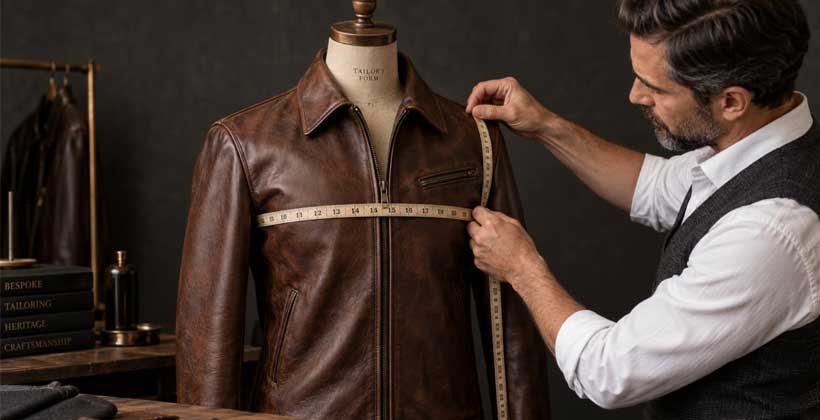
1. Chest / Bust Measurement: Pass the measuring tape under the armpits, wrapping it across the fullest part of the chest and around the shoulder blades at the back. Keep the tape parallel to the floor.
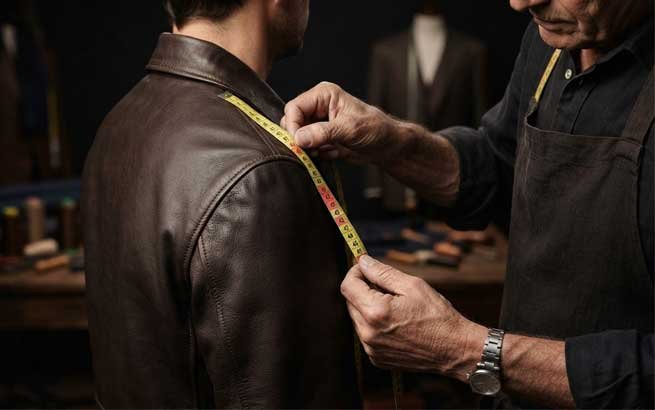
2. Shoulder Width: Locate the bony prominence at the tip of one shoulder. Measure straight across the upper back curve to the corresponding point on the opposite shoulder.
3. Sleeve Length: Start from the tip of the shoulder point, extending down along the outside curve of a slightly bent arm, past the wrist bone to the base of the thumb joint.
4. Waist and Hips: Wrap the tape around the narrowest part of your waistline for cropped styles, or around the fullest part of the hips for longer cut jackets.
- Adds 2 to 3 inches over body measurements. Ideal for Cafe Racers and single-layer wear.
- Adds 4 to 5 inches over body measurements. Perfect for classic biker styles and light sweater layering.
- Adds 6+ inches over body measurements. Designed for heavy winter layering and flight bomber styles.
For international buyers, brands, and corporate clients placing bulk custom orders with DuoHide, maintaining consistent sizing standards across regional markets is critical. Always review technical spec sheets detailing flat-garment dimensions across all intended size runs before mass production.
By following these precise measurement protocols, you ensure an ideal fit that highlights craftsmanship, structural integrity, and long-lasting comfort.