

September 20, 2026
By
DuoHide
Real vs Fake Leather Guide to Spot Authentic Quality
In an evolving market filled with synthetic textiles, alternative finishes, and deceptive labeling, distinguishing genuine leather from fake or synthetic substitutes has become essential. Buyers—ranging from discerning retail customers searching for heirloom pieces to B2B brands sourcing raw materials—face a sea of terms like "vegan leather," "PU leather," "bonded leather," and "genuine leather."
While synthetic materials have improved in visual appearance over recent years, they remain fundamentally inferior in durability, breathability, aging, and structural integrity. At DuoHide, we believe that true luxury begins with complete transparency in material selection. This guide breaks down the essential testing methods, tactile indicators, structural differences, and long-term characteristics that distinguish high-grade real leather from synthetic imitation.
Why Material Authenticity Matters in Leather Craft
Choosing authentic leather is not merely a matter of aesthetic preference; it directly impacts product performance, comfort, and commercial value. Real leather is an organic material composed of dense collagen fiber networks that flex, breathe, and adapt over time.
Understanding material authenticity is critical to avoiding poor quality and unexpected failures:
1. Durability & Longevity: Real leather lasts for decades, developing a rich patina with age. Synthetic leather peels, cracks, and degrades along seam lines within a few years of regular exposure and wear.
2. Breathability & Comfort: Natural porous hide allows air and moisture circulation, preventing heat trap. Synthetic polymers create an airtight barrier that causes heat retention and moisture buildup.
3. Environmental & Repair Value: Genuine hides can be conditioned, restored, and repaired over time, whereas damaged synthetic coatings generally require complete replacement.
Essential Tools and Methods for Testing Leather
Before evaluating hides or finished garments, prepare to examine the material across multiple sensory touchpoints:
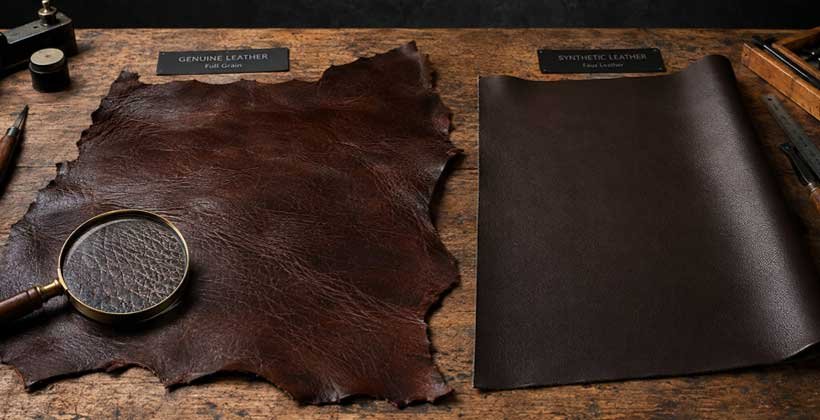
1. Magnifying Lens or Macro Inspection: Inspect the surface pattern at close range. Genuine leather displays natural, random pore variations, whereas synthetic leather exhibits uniform, repeating stamped patterns.
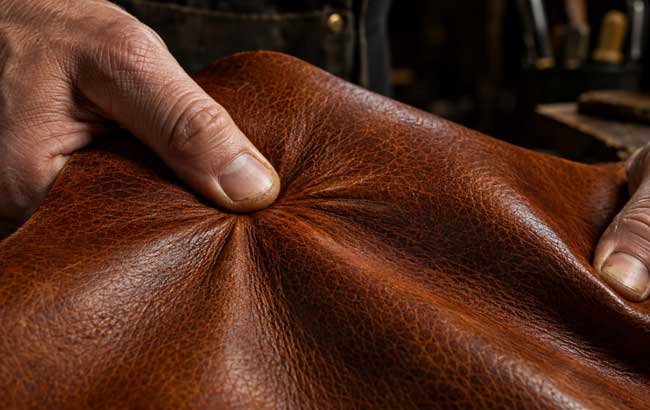
2. Tactile & Pliability Testing: Press your thumb firmly into the surface of the material. Real leather wrinkles naturally around the pressure point under elasticity; faux leather depresses like rigid plastic or vinyl.
3. The Olfactory Test: Natural leather possesses a rich, earthy, distinct scent derived from organic tanning processes. Fake leather emits a sharp chemical, plastic, or petroleum-based odor.
4. Edge & Backing Examination: Inspect exposed cut edges or seam backings. Real leather features fibrous, fuzzy undersides, while fake leather reveals woven fabric backing or plastic netting.
"Authenticity in leather crafting cannot be simulated. True leather breathes, ages, and tells a story that synthetic alternatives can never duplicate."
— DuoHide Craftsmanship Team
Step-by-Step Material Evaluation Checkpoints
To accurately verify leather quality against manufacturing claims, check these critical material characteristics:
1. Surface Porosity & Grain Texture: Search for subtle natural flaws, insect marks, or slight color variations. Perfect uniformity is often a telltale sign of synthetic manufacturing or heavy polyurethane coating.
2. Water Absorption Test: Place a single droplet of water on an unsealed area of the hide. Genuine leather slowly absorbs the moisture over a few minutes; synthetic leather repels water instantly, letting it bead on top.
3. Flexibility & Temperature Response: Real leather feels warm and supple to the touch, rapidly adapting to body temperature. Synthetic materials feel cool, slick, and stiff upon initial contact.
4. Edge Seam Structure: Check raw or cut edges. Real leather shows natural fiber cross-sections throughout the layer thickness, whereas fake leather shows layered polymers glued onto a textile base.
- Full-Grain Leather: The highest grade available. Unaltered surface showing natural grain, maximum strength, high breathability, and superior aging characteristics.
- Top-Grain Leather: Sanded top layer to remove surface imperfections, lightly buffed, and coated for a uniform finish while retaining strong flexibility.
- Genuine / Split Leather: Made from the lower layers of the hide after splitting. Budget-friendly genuine option, often embossed with a grain pattern.
- PU / Synthetic Leather: Polyurethane layer bonded to a fabric base. Completely artificial, non-breathable, uniform in pattern, but prone to cracking and peeling over time.
For corporate clients, fashion labels, and retail brands sourcing leather goods through DuoHide, understanding the nuances of leather grades guarantees that product specifications match commercial requirements. Ensuring high material standards protects brand reputation, minimizes product returns, and guarantees customer loyalty.
By applying these core testing methods and structural evaluations, you can confidently distinguish authentic leather from synthetic alternatives, ensuring lasting value and uncompromised quality in every piece.