

September 18, 2026
By
DuoHide
The Complete B2B Guide for Custom Leather Goods & MOQs
Scaling a leather brand or stocking custom products for wholesale requires more than just finding a manufacturer—it demands a clear understanding of the production pipeline, minimum order quantities (MOQs), and quality benchmarks. Whether you are launching a new private-label line, sourcing custom corporate gifts, or expanding an established boutique, navigating wholesale leather manufacturing can be complex.
In this comprehensive guide, we break down the end-to-end B2B process for custom leather goods manufacturing: from initial prototyping and logo customisation to understanding MOQs, quality control, and bulk production timelines.
Navigating Minimum Order Quantities (MOQs)
For emerging brands and wholesale buyers, Minimum Order Quantity (MOQ) is often the most critical factor when planning inventory and capital allocation. Manufacturers establish MOQs based on raw material purchasing limits, setup labor, and machinery preparation.
Understanding these underlying production constraints helps buyers structure their orders effectively:
1. Custom Die-Cutting Patterns: Creating physical cutting knives and custom tooling specifically for your proprietary designs.
2. Leather Hide Sourcing: Tanneries sell leather hides in bulk minimums or specific square-footage batches per dye color.
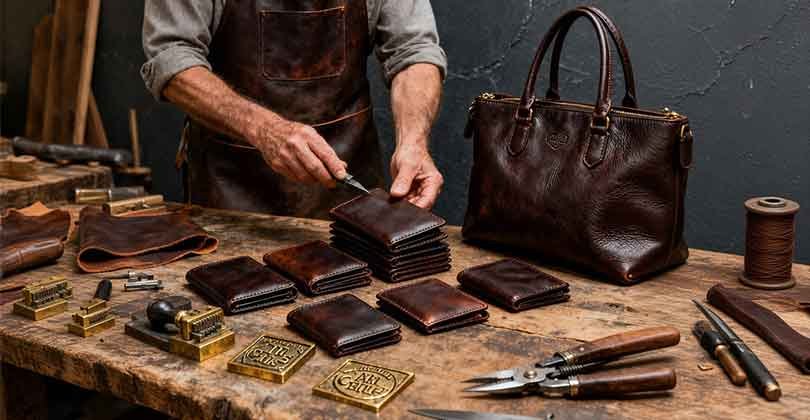
3. Machine Calibration & Stamping Setup: Setting up embossing dies, adjusting thread weights, and preparing specialized edge-finishing tools for a specific run.
Flexible MOQ Strategies for Growing Brands
To support expanding businesses without forcing excessive upfront inventory risks, flexible manufacturers offer strategic low MOQ options:
1. Standardize Leather Types & Colors: Utilizing a shared leather tannage or colorway across multiple product models allows factories to consolidate material buys and lower per-style MOQs.
2. Tiered Wholesale Pricing: Ordering lower initial volumes may incur a slightly higher per-unit cost, but it lowers cash-flow risk while testing new product designs in live markets.
"Seamless B2B leather manufacturing relies on transparent communication, material consistency, and structural precision. Lowering production friction begins at the prototyping stage."
— DuoHide Production Team
Step-by-Step Customization & Prototyping Process
Bringing a custom leather product from a digital tech pack to a shelf-ready retail item requires a disciplined physical prototyping workflow:
Step 1: Tech Pack & Specification Review: Establish detailed blueprints covering exact product dimensions, pocket/compartment layouts, hardware finishes (brass, antique, or nickel), lining choices (canvas, suede, microfiber), and leather tannage selection (Full-Grain, Top-Grain, Veg-Tan, or Chrome-Tan).
Step 2: Sample & Prototype Development: Before launching full-scale bulk manufacturing, a physical sample is produced to evaluate stitch density, thread strength, edge painting or burnishing, and overall structural functionality.
Step 3: Sample Feedback & Final Sign-Off: Test the physical prototype in real-world scenarios. Make required micro-adjustments to hardware placement or seam allowances before issuing formal sign-off for mass production.
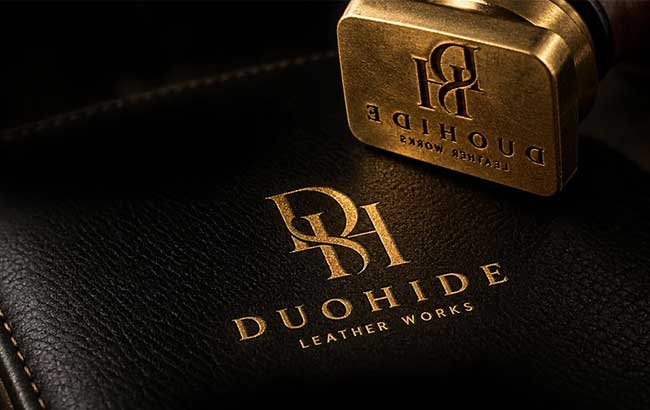
- Blind Embossing (Debossing): Heat and deep-pressure stamping that embeds your logo directly into the leather hide for a timeless, high-end textural mark.
- Foil Stamping: Combines metallic foils (gold, silver, matte black, or bronze) with heat-embossing for high contrast and luxury presentation.
- Custom Hardware Castings: Engraving or casting custom brand marks directly onto metal zipper pulls, rivets, buckles, or snap buttons.
- Internal Fabric Labels & Packaging: Integrating custom-woven brand labels inside linings, along with branded kraft hangtags and dust bags for retail presentation.
For international buyers, emerging fashion brands, and corporate clients partnering with DuoHide, establishing a reliable supply chain begins with transparent manufacturing practices. By understanding MOQ structures, insisting on meticulous sampling, and leveraging custom private-label branding, wholesale clients can comfortably scale their inventory without compromising on luxury craftsmanship.
Whether you are launching a new leather collection or upgrading your corporate gifting line, working directly with experienced artisans ensures that every finished piece reflects high structural integrity, exact brand specifications, and long-lasting commercial value.